We have been lucky during the last month or so as we had several evenings/nights suitable for night time photography with some clear skies, supermoons, amazing auroras and more. Below a selection of photos taken by Visions members after sunset.

Night time in Marrakesh – by Graeme Youngson.

A bit closer to home: Amsterdam at night by Dave Lynch
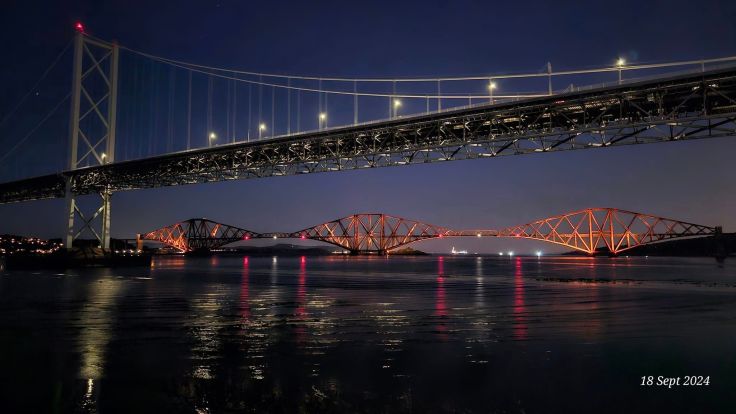
Road and Railway Bridges over the Forth – by Bob Taylor. Nice colour contrast of the blue hour sky and the iconic red of the railway bridge.

The enchanted forest – by Lynda Gordon. A yearly event in Faskally Wood, near Pitlochry, Scotland
Enchanted forest 2 – by Lynda Gordon

A supermoon is a full moon or a new moon that nearly coincides with perigee—the closest that the Moon comes to the Earth in its orbit—resulting in a slightly larger-than-usual apparent size of the lunar disk as viewed from Earth. The most recent full supermoon occurred on September 18, 2024, and the next one will be on October 17, 2024. Most of the images below were taken on or around September 18.
To take a Supermoon shot with an interesting foreground take a bit of planning with an app like PhotoPills or the Photographer’s Ephemeris. These are great to figure out beforehand where to put your tripod, to ensure the moon is in the correct location relative to the chosen foreground object. This changes quickly so a bit of space is required to be able to fine tune the camera position when the moon appears. These shots often look best when taken with a long lens, like a 400mm or longer, to get the moon as large as possible. Another factor is the illumination of the foreground and the colour of the sky itself. The golden hour and blue hour are a good time for this as the sky is not completely black.
A club night coincided with the Supermoon, so a club outing was organised to the beach with the idea of getting a shot of the moon and the Aberdeen wind turbines.
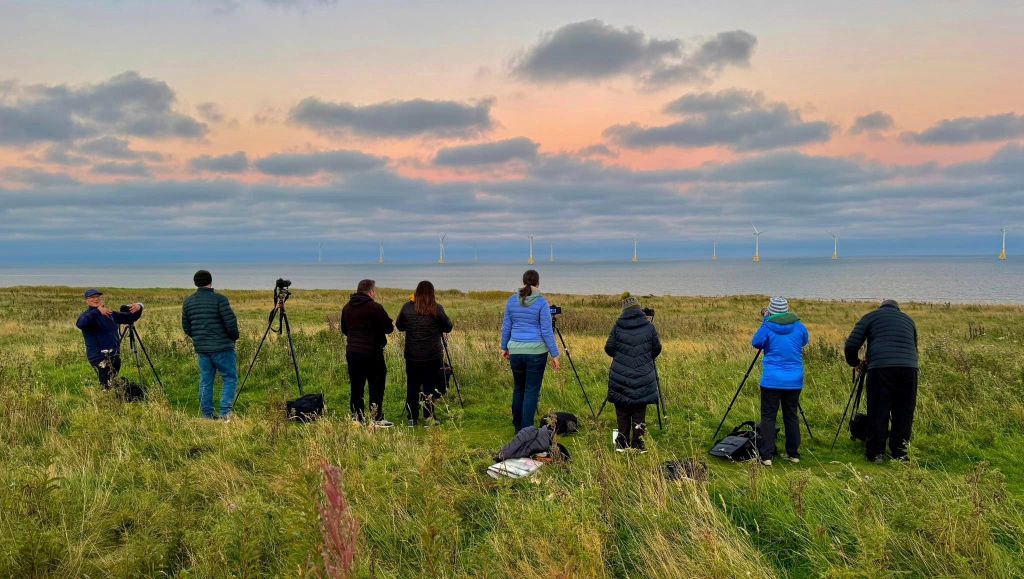
Hoping for the cloud to clear……

This proves that the moon is flat, here seen from the side. A rare occurence, only happens briefly once every 1.5 million years. By David Drage.

Moon over the harbour entrance – by Stephen Lynch

Full moon rise – by Sue Heard. An atmospheric shot.

Super moon over a wind turbine – by Andy Reader

Wind turbines, the Shetland ferry and the Moon – Dave Lynch
A small subset of Visions photographers used the opportunity of a cloudless and moonless night to visit Loch Muick to take photos of the Milky Way. We were rather surprised to meet a supermarket delivery driver at the Loch Muick carpark who was looking for the ranger, but without a phone signal unable to contact him. I wondered if the ranger had something to eat that evening. A brief walk in the dark got us to our photo location sometime before 8pm, mapped out by Dave Lynch with the excellent PhotoPills app.
It was an amazing experience to be out there, the loch lit by starlight and stags roaring in the background, and for a while Pink Floyd on a bluetooth speaker until the battery ran out. We stayed there until about 1am, by which time I could barely feel my toes despite wearing the thickest socks I could find. But it was definitely worth it for the experience of being there.
Dave had planned the location so we would have the boat house in the foreground with the Milky Way behind it. A bit of scramble on the steep bank to the loch. Bog and rocks made it hard to find a place to put your feet. This is where the spiked feet on my tripod proved really useful, used as a three legged walking stick.

In this shot by Dave Lynch the foreground is illuminated with a head torch. Getting an even illumination can be tricky, but the diffuse beam of the head torch worked well. We did try using torches, but it is hard to avoid bright spots.
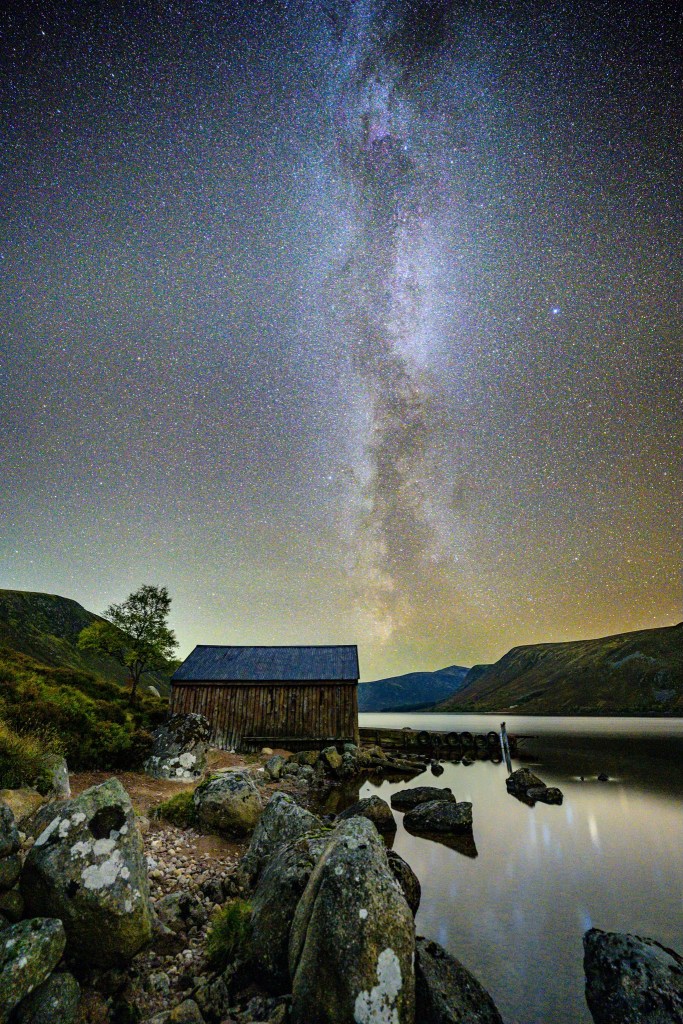
A bit later we decided to move down to the rocky beach. The Milky Way is now to the right of the boat house, as the earth has rotated a bit further to the east. This shot is made up of 2 exposures: 15 seconds for the sky, so the stars are still rendered as dots. With a 14mm focal length lens that is about the correct exposure time, longer at 30 seconds they start to look like short dashes. The foreground shot was 150 seconds illuminated just by starlight. Then imported into Photoshop as layers, the stripey sky of the foreground shot selected (with a bit of help from AI) and made transparent. Easy once you have Googled how to do this. 😉
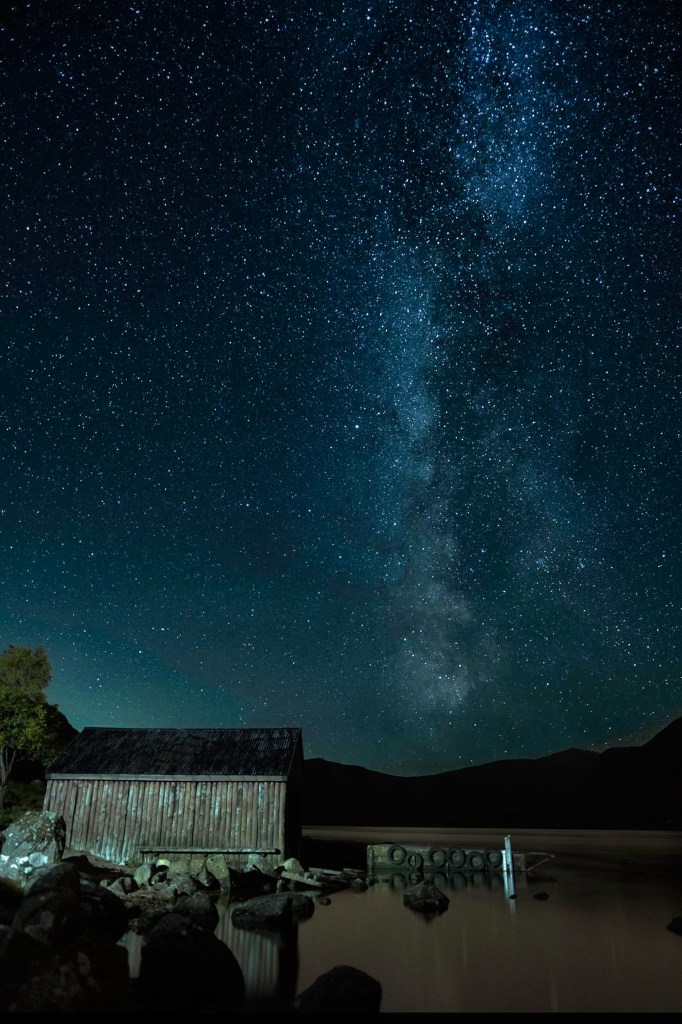
Milky Way by Sue Heard – foreground light painted with a small led torch in this shot.
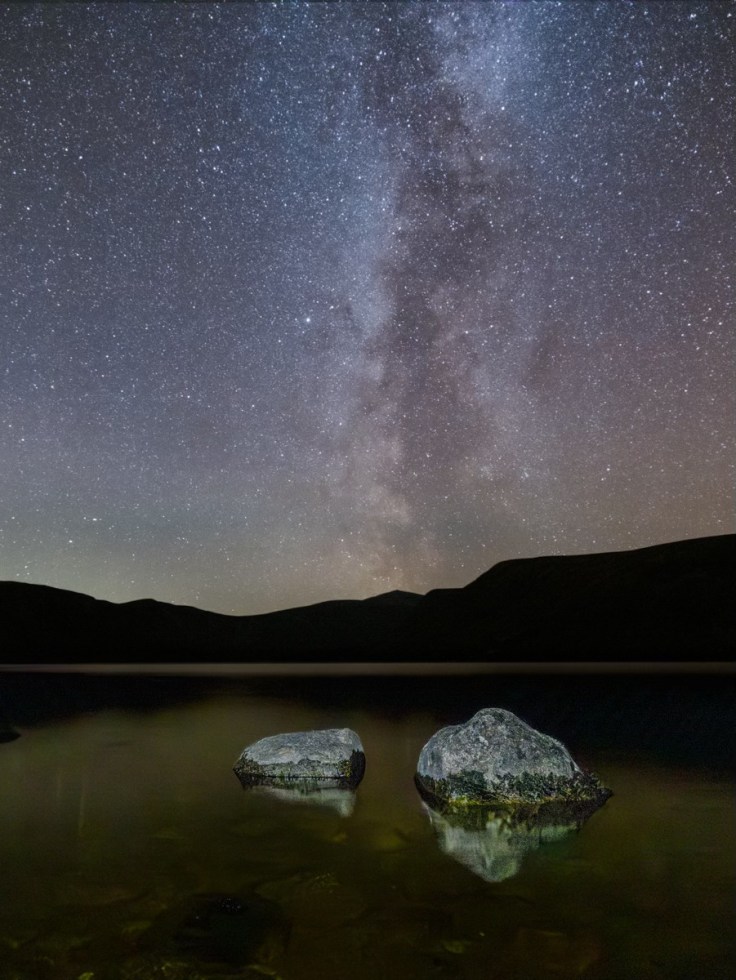
Rocks in the Loch – Dave Lynch. Dave also took a few shots using his astro rotator. This device mounts on the tripod, carefully aligned with the earth axis by pointing it at the north star. It then rotates in the opposite direction of the earth itself, keeping the camera aligned with the stars. You can then take much longer exposures, get less noise and better colours. The drawback is that the foreground now moves relative to the camera and gets blurred.
A second shot of the foreground has to be combined with the star photo to create the final image.
An alternative to a rotator is to take multiple 15 second shots and stack these together after alignment. There are a number of apps that will do the stacking, thereby reducing noise and getting rid of passing satelites and aircraft. I tried this but found it tricky to get the foreground/sky masked correctly. More practice needed.

Fiddling around with the camera on the pier. Phone shot by Dave Lynch showing the bonus Aurora behind us.
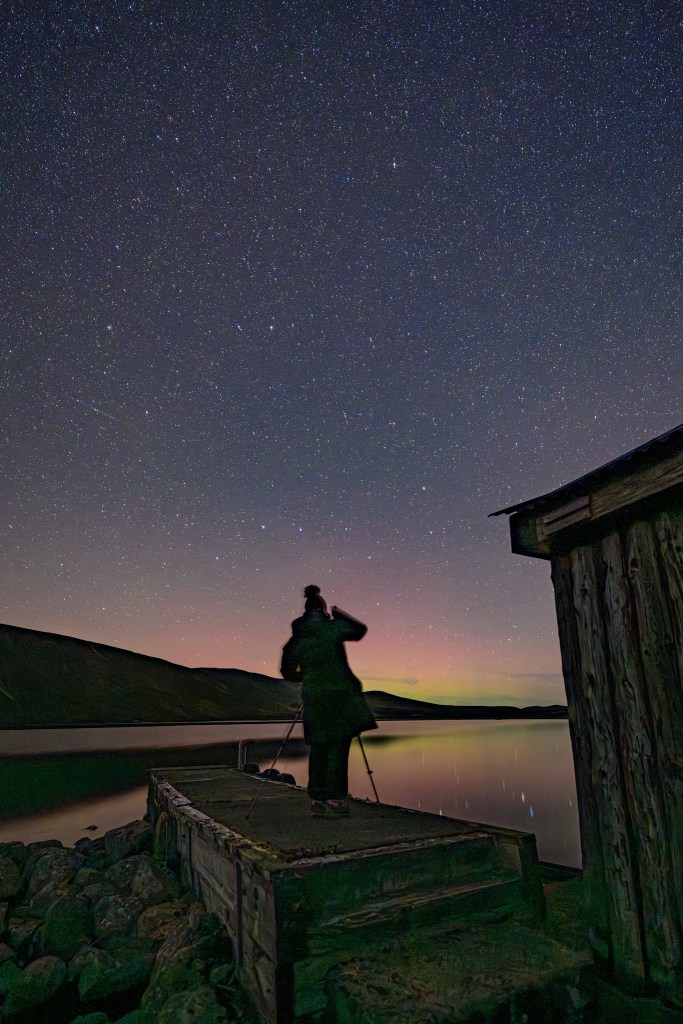
Sue capturing the Aurora – by Rob Romani

Milky Way over the loch by Sue Heard. There was a slight breeze so the reflections in all our shots are a bit blurred. Maybe next time it might be like a mirror…..
Our last thursday evening Visions club meet coincided with a strong aurora. that was even photographed by people in London. My family members took amazing iPhone photos of it, below a few aurora shots from fellow club members.

Aurora – Kate Spink

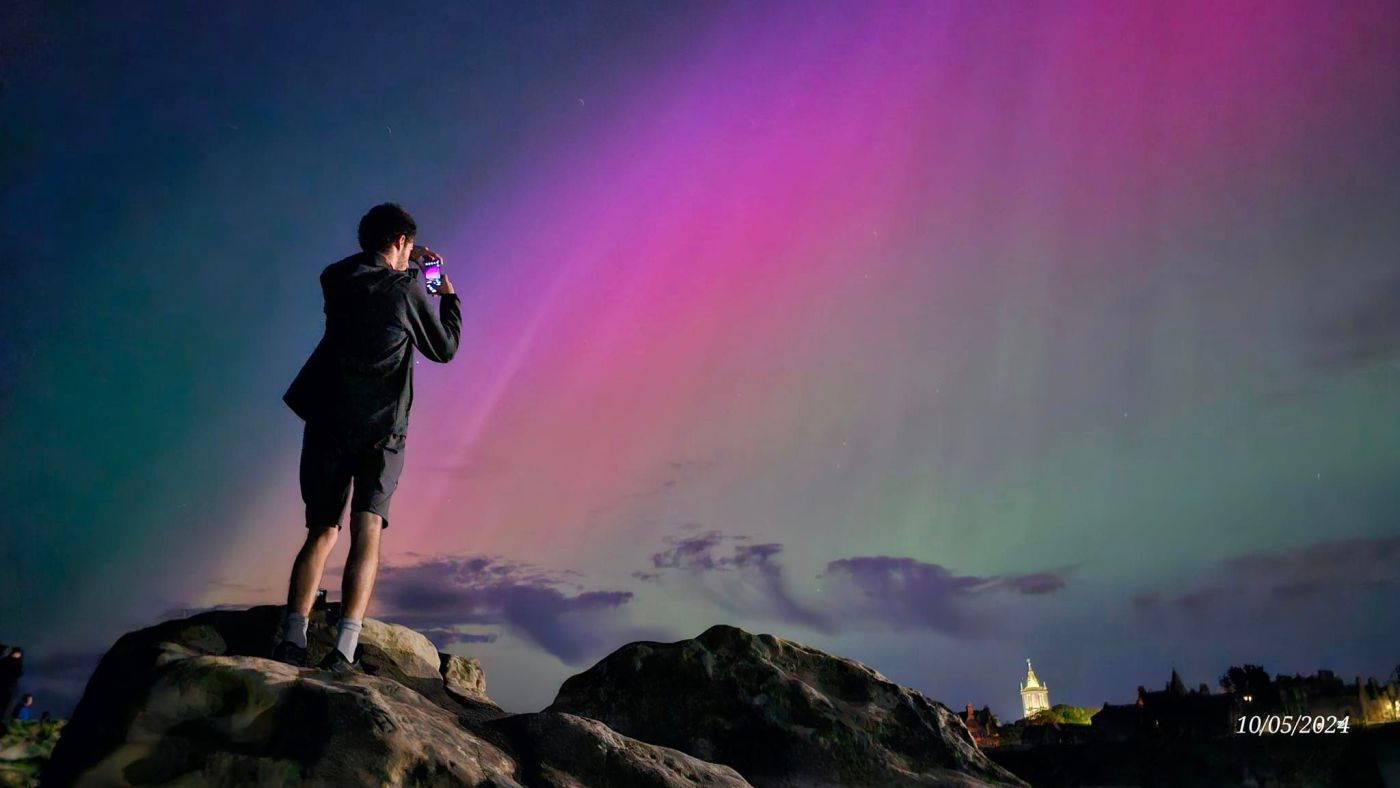
Taken earlier in May, Aurora phone shot by Bob Taylor. What I like about this one is that the person taking the photo has the aurora on his phone screen!

Aurora Borealis – by Kate Spink. Amazing patterns.
 Visions Photography Club
Rob
Super, very well put together.
Lynda
LikeLike