
by Rob Romani
Visions recently ran a quarterly team competition on the subject of Movement. I tried some ICM, took photos of waves, but wasn’t happy with anything I had done. With only 2 days left, I decided to do a car to car shoot. The car sharp, but the background blurred to show the speed.
But instead of standing by the roadside and pan with the car as it comes past, I was a back seat passenger in another car and took photos out of the window.
I watched a couple of YouTube videos on how to do this. The consensus seemed to be that a shutter speed of 1/30 is about right. Driving at a modest 30mph should also be effective. Going faster than this creates wind buffeting making it harder to hold the camera steady. Any bumps on the road also makes the cars move up and down more.
Some people do this strapped in the boot of an estate car, but that is illegal in Europe as you aren’t in a seat with a seatbelt. We used to own an old 7 seater Merc estate that would have been great as it had two rear facing seats. So instead we tried holding the camera out of the window. Using the tilting rear screen I had at least some idea of where to aim the camera. Fortunately modern cameras can be set to focus on people, animals, cars and planes. I selected car and hoped it would work.
There are other more complex and expensive ways to do this. Like having the camera on a low level gimbal rig attached to the back of the camera car,

Or having a camera mounted on a boom at the front of the car to be photographed. You then delete the boom in post processing. You can then use much longer exposures like 2-3 seconds and get more blur. Somehow the idea of having my camera dangle just above the road didn’t appeal to me….
A wide angle lens helps to get plenty of road in the foreground. The shorter focal length also helps to create a more dynamic perspective.
Next, we had to find a scenic road. It needed long straights. This approach allowed the car following us to begin an overtaking manoeuvre. It could then stay in the other lane long enough to take a few shots. Fortunately, NE Scotland has plenty of quiet roads that fit the bill. We went out after the rush hour had finished, to minimise the chances of other vehicles on the road.
We decided on hand signals to tell the driver of the following car to get closer or back off a bit.
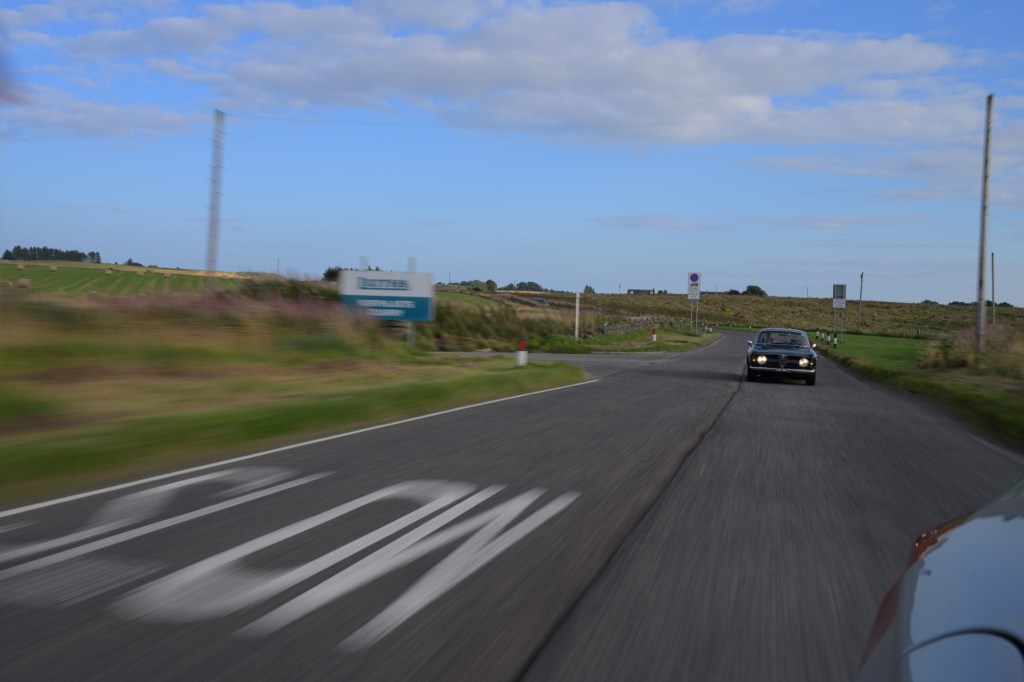
One of the first photos to check the camera settings. Using a 24mm focal length means the cars have to be closer then this obviously. Also it is too easy to get part of the camera car in the shot. You can see the blur of the lettering on the road.
We stopped briefly to review the first batch and found only 1 out of every 10 or 20 shots was perfectly sharp. Camera focussing worked perfectly, but at 1/30th of a second the bumpy roads make both the camera car and the Alfa bounce up and down. Enough to make the majority of shots unsharp. A faster shutter speed would help but then the blur of the road would disappear.
Even a camera with a stabilised sensor can’t stabilise the car behind 😉
We ended up with nearly 1400 shots to sift through, all shot in a time span of less then 50 minutes.

Driving in this direction created an annoying shadow behind the camera car. Fortunately the roads aren’t straight for long and we also drove in the opposite direction.
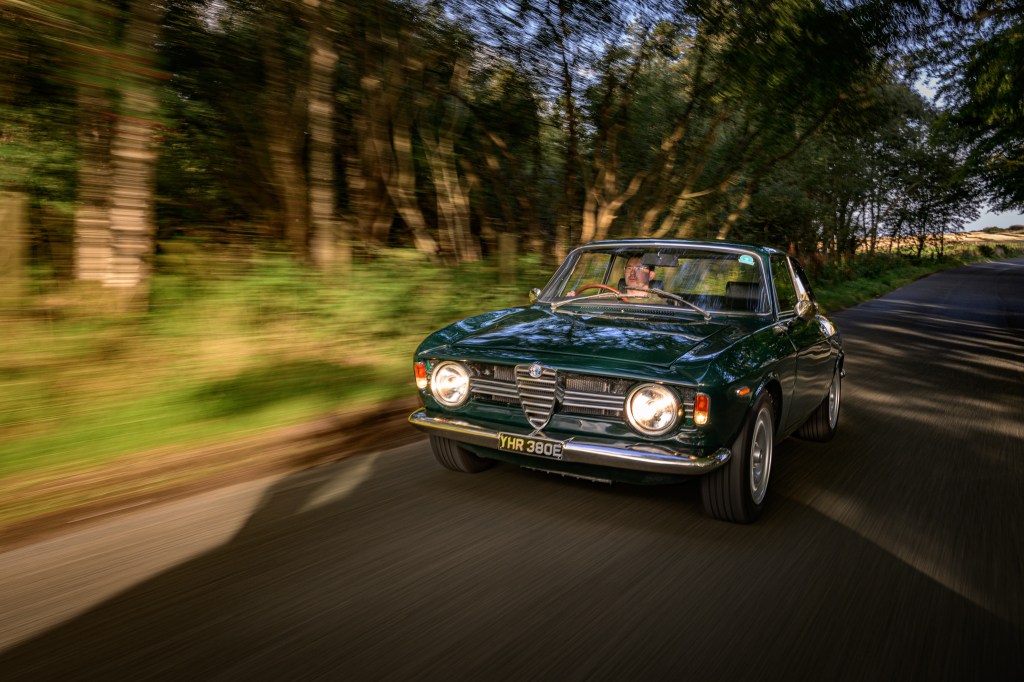
Played a bit with object removal to get rid of the shadow of the car mirror. A bit of pop added in LR and a tighter crop.
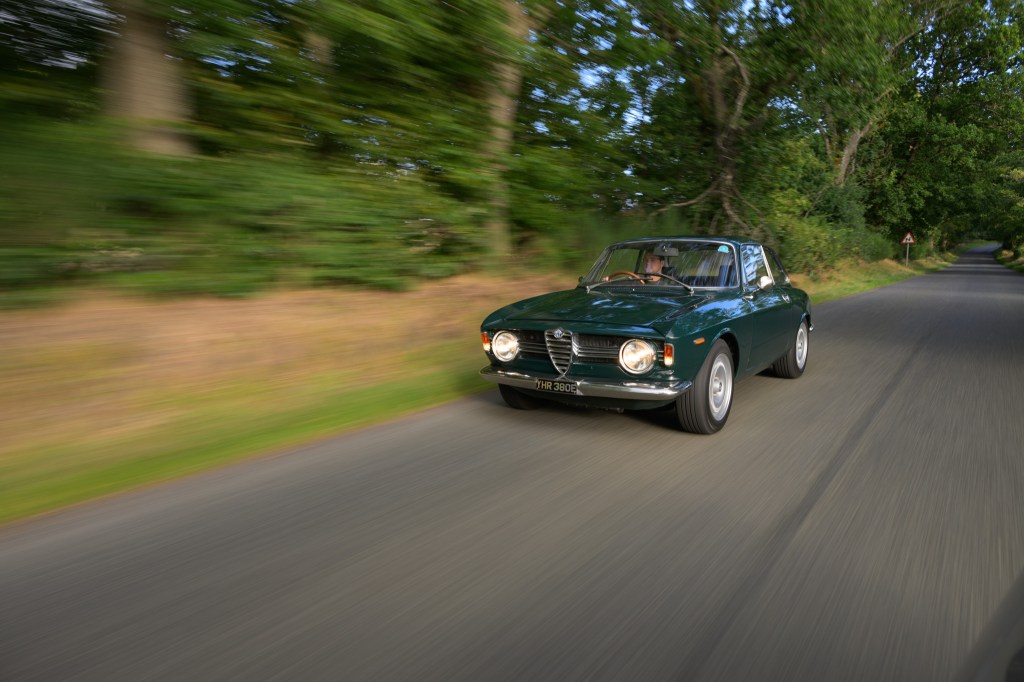
A bit later on this shot is straight out of the camera. A bit dull, but there is Lightroom….

A bit of editing to give it a bit more impact, also rotated the image a bit. Used AI to select the car, inverted the mask and darkened the surroundings. More clarity and texture to accentuate the texture of the tarmac.

As it comes out of the camera. The sun is in the frame, so the camera under exposed to preserve the highlights. Note part of the camera car in the bottom right corner.

A few clicks in Lightroom later….
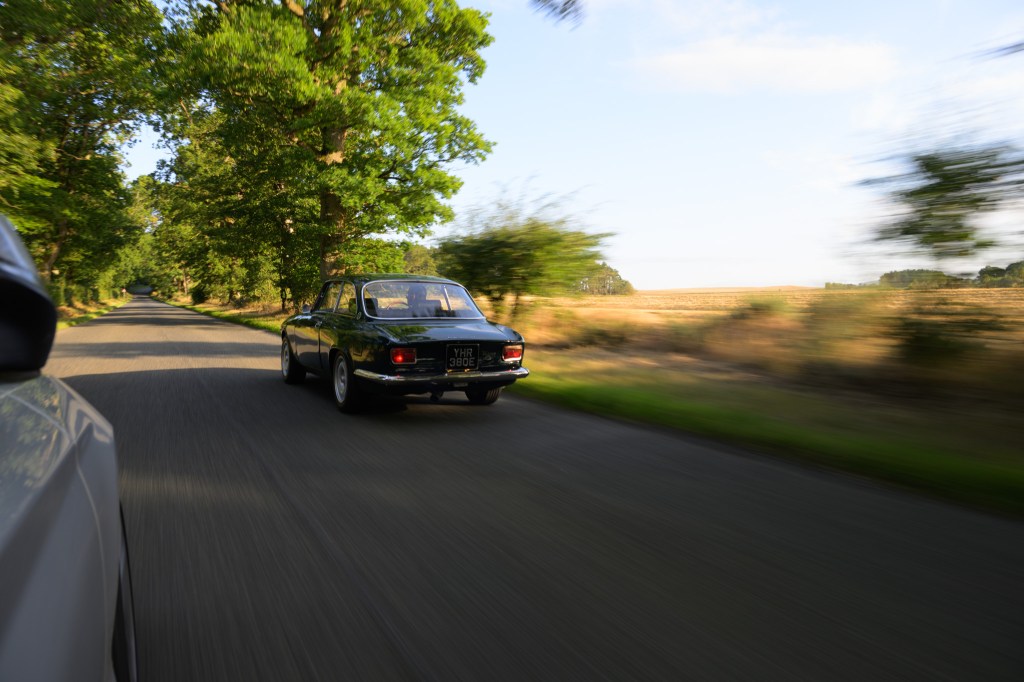
And there she goes past, twin Weber carbs wide open. Shot in this direction it is hard to avoid the door mirror of the camera car in the shot
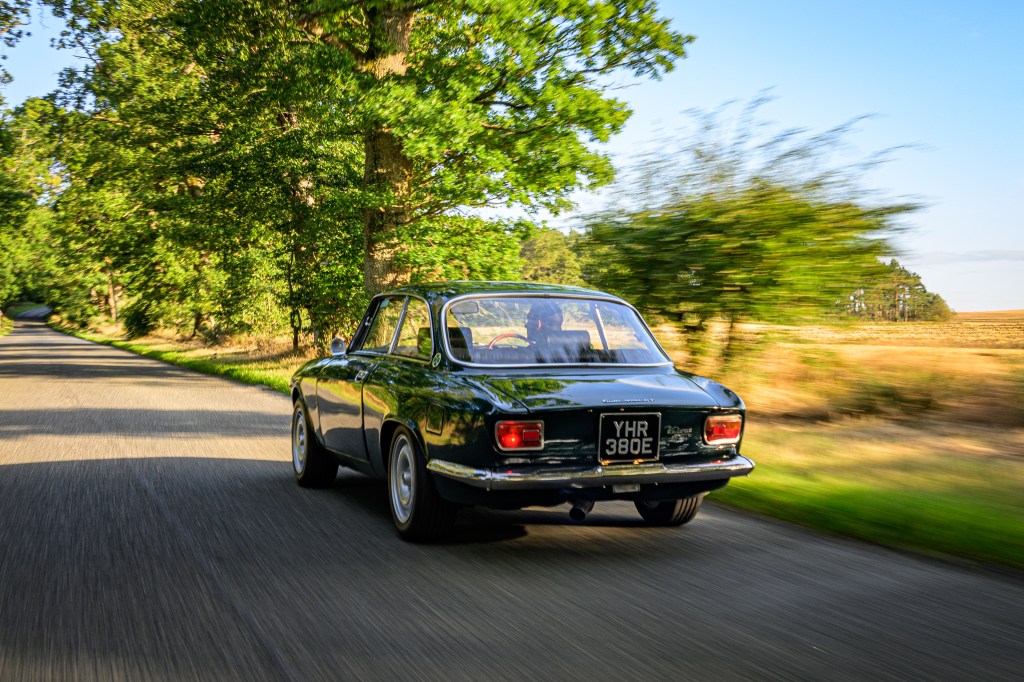
After a bit of cropping and editing.
The low sun and the trees and hedges create different lighting every few shots. I shot at 20 frames per second. I did this every time it was safe to get the Alfa in position on the other side of the road. This maximised the number of usable frames where the car was sharp and the lighting was good.

Out of the camera this looks underwhelming, but….
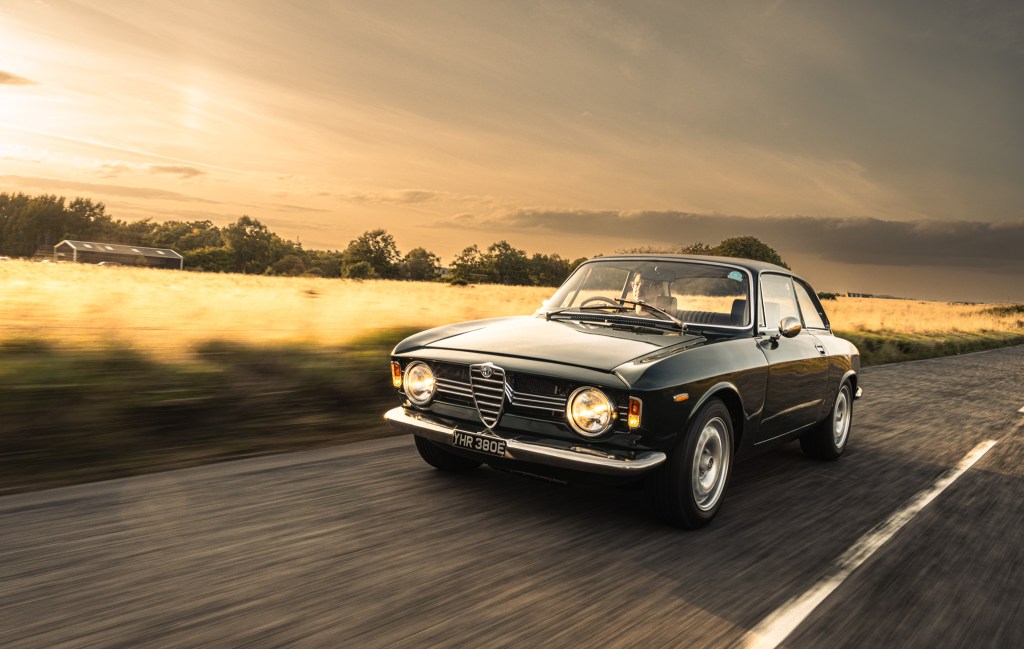
But after a bit of work in Lightroom we end up with this. Late summer colours. Happy with that one.
Thanks to Jessica for driving the camera vehicle and Cameron for driving the 1967 Alfa Romeo Giulia Sprint GT Veloce. Yes, it really has a long name like that.
And thanks to Giorgetto Giugaro for designing this great looking car in 1963. He also designed the VW Golf mk1, BMW M1, and dozens more. And not many people know this: he designed some of the Nikon DSLR’s including the D3, D800, Df.
 Visions Photography Club
Please leave a comment - we would love to hear from you.